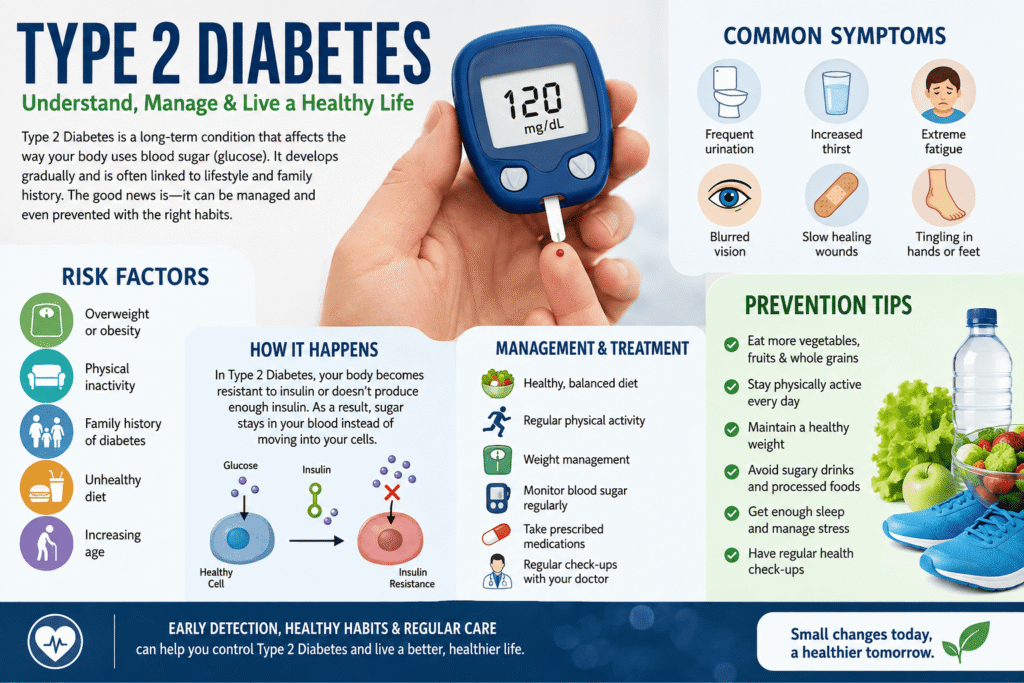
What if a health problem could develop slowly, cause few noticeable symptoms, and still affect your heart, eyes, kidneys, and nerves? That is one reason Type 2 Diabetes deserves serious attention. Many people do not realize they have it until a routine blood test finds high blood sugar.
Type 2 Diabetes is a long-term condition in which blood glucose, or blood sugar, becomes too high because the body does not use insulin effectively or does not produce enough insulin. It is the most common type of diabetes. Symptoms can develop gradually, and some people have no obvious symptoms at all.
The good news is that Type 2 Diabetes can often be managed effectively. Healthy eating, regular physical activity, weight management, monitoring, and prescribed treatment can all play an important role.
This guide explains the causes, warning signs, risk factors, diagnosis, treatment, prevention, and everyday management of Type 2 Diabetes in simple language.
Table of Contents
What Is Type 2 Diabetes?
Type 2 Diabetes happens when the body has difficulty controlling blood glucose. After you eat, carbohydrates are broken down into glucose. This glucose enters the bloodstream and provides energy to your cells.
Insulin is a hormone produced by the pancreas. It helps glucose move from the blood into cells.
With Type 2 Diabetes, this system does not work properly. The body’s cells may become resistant to insulin. Over time, the pancreas may also struggle to produce enough insulin. As a result, glucose stays in the bloodstream and blood sugar levels rise.
Type 2 Diabetes vs. Type 1 Diabetes
Although both conditions involve high blood sugar, they are different.
- Type 1 diabetes: The immune system attacks insulin-producing cells in the pancreas.
- Type 2 Diabetes: The body usually develops insulin resistance and may eventually produce too little insulin.
- Gestational diabetes: Diabetes that develops during pregnancy.
Type 2 Diabetes is generally the most common form of diabetes.
Common Symptoms of Type 2 Diabetes
One challenge with Type 2 Diabetes is that symptoms may be mild. Some people may have no noticeable symptoms for a long time.
Common signs include:
- Frequent urination, especially at night
- Increased thirst
- Feeling unusually tired
- Increased hunger
- Blurred vision
- Slow-healing cuts or wounds
- Tingling or numbness in the hands or feet
- Unexplained weight loss
- Recurrent infections
- Irritability or changes in mood
According to NIDDK, Type 2 Diabetes symptoms can develop slowly over several years. Some people discover the condition only after complications or routine testing.
Why Early Symptoms Can Be Missed
Imagine someone who feels tired after work every day. They may blame poor sleep or a busy schedule. Another person may drink more water because the weather is hot.
However, if several symptoms occur together, it is worth discussing them with a healthcare professional.
Early testing matters because untreated high blood sugar can increase the risk of damage to the eyes, kidneys, nerves, heart, and blood vessels.
What Causes Type 2 Diabetes?
There is no single cause of Type 2 Diabetes. Instead, several factors can contribute to its development.
Insulin Resistance
Insulin resistance is one of the major features of Type 2 Diabetes.
Think of insulin as a key. The key helps glucose enter your cells. With insulin resistance, the “lock” becomes harder to open. The pancreas may produce more insulin to compensate.
Eventually, the pancreas may not be able to keep up with the body’s needs.
Excess Weight
Being overweight or having obesity can increase the risk of Type 2 Diabetes. However, it is important to understand that not everyone with Type 2 Diabetes is overweight.
Body fat distribution can also matter. Therefore, focusing only on body weight can give an incomplete picture of diabetes risk.
Physical Inactivity
Regular physical activity helps the body use glucose and can improve insulin sensitivity.
On the other hand, spending most of the day sitting and getting little exercise may contribute to insulin resistance and other metabolic problems.
Family History and Genetics
Having close family members with Type 2 Diabetes can increase your risk.
Genes cannot be changed. However, lifestyle factors can often be improved. Therefore, a family history does not mean that diabetes is inevitable.
Age and Ethnicity
Risk generally increases with age. In addition, some ethnic groups have a higher risk of developing Type 2 Diabetes at younger ages.
For example, Diabetes UK notes that people of South Asian backgrounds, including Pakistani, Indian, and Bangladeshi backgrounds, have increased risk.
Major Risk Factors for Type 2 Diabetes
Some risk factors can be changed, while others cannot.
Risk Factors You Cannot Change
These may include:
- Family history
- Increasing age
- Genetic factors
- Ethnic background
- A previous history of gestational diabetes
Risk Factors You May Be Able to Change
These include:
- Physical inactivity
- Unhealthy eating patterns
- Excess body weight
- Smoking
- Poor sleep habits
- High blood pressure
- Abnormal cholesterol or blood fat levels
Having one risk factor does not mean you will definitely develop Type 2 Diabetes. Likewise, someone without obvious risk factors can still develop it.
How Is Type 2 Diabetes Diagnosed?
A healthcare professional can diagnose diabetes using blood tests. A home glucose meter can help monitor blood sugar, but it should not be used by itself to make a formal diagnosis.
Common diagnostic tests include:
A1C Test
The A1C test estimates average blood glucose over roughly the previous three months.
According to NIDDK, an A1C result of 6.5% or higher is within the diabetes range for diagnosis.
Fasting Plasma Glucose Test
This test measures blood glucose after fasting.
A fasting plasma glucose result of 126 mg/dL or higher is in the diabetes range.
Oral Glucose Tolerance Test
For this test, blood glucose is measured after fasting and again after consuming a glucose-containing drink.
A two-hour result of 200 mg/dL or higher is within the diabetes range.
Random Blood Glucose Test
A random plasma glucose test can also help diagnose diabetes, particularly when someone has symptoms.
A result of 200 mg/dL or higher can be in the diabetes range when appropriate clinical symptoms are present.
Your doctor may repeat testing to confirm a diagnosis. Do not diagnose yourself from one home blood sugar reading.
Treatment for Type 2 Diabetes
There is no single treatment plan that works for everyone. Treatment depends on blood glucose levels, overall health, medications, weight, heart and kidney health, and other individual factors.
The main approaches can include lifestyle changes, diabetes medicines, and regular monitoring.
Healthy Eating
A diabetes-friendly eating pattern does not mean you must completely stop eating carbohydrates.
Instead, focus on balanced meals.
For example, a meal could include:
- Non-starchy vegetables
- A source of protein
- High-fiber carbohydrates
- A moderate amount of healthy fats
- Water or another low-sugar drink
Portion size also matters.
For example, instead of eating a large serving of white rice with little protein or vegetables, you could combine a smaller portion of rice with vegetables, lentils, chicken, fish, or another protein source.
Physical Activity
Regular movement can help improve insulin sensitivity and support blood glucose management.
Examples include:
- Walking
- Cycling
- Swimming
- Strength training
- Household activities
- Light jogging, when appropriate
If you have been inactive for a long time, start gradually. People with medical conditions should ask their healthcare professional about appropriate exercise.
Weight Management
For people who are overweight, losing weight may improve blood glucose control and reduce health risks.
However, weight management should be realistic. Extreme diets are often difficult to maintain.
A better approach is to build habits that can continue for months and years.
Medicines
Some people can initially manage their blood sugar through lifestyle changes, while others need medication.
Metformin is a commonly used medicine for Type 2 Diabetes. Other medicines may also be prescribed, including tablets or injectable treatments. Some medications can also provide benefits related to weight, heart health, or kidney protection in appropriate patients.
Never start, stop, or change diabetes medication without discussing it with your healthcare professional.
Insulin
Some people with Type 2 Diabetes eventually need insulin.
Needing insulin does not mean someone has failed to manage their condition. Type 2 Diabetes can change over time, and the pancreas may produce less insulin as the condition progresses.
How to Manage Type 2 Diabetes Every Day
Living with Type 2 Diabetes is easier when you create a consistent routine.
Build a Simple Daily Routine
Try to:
- Eat balanced meals at regular times.
- Stay physically active.
- Take medicines exactly as prescribed.
- Monitor blood glucose when recommended.
- Drink enough water.
- Get adequate sleep.
- Attend medical appointments.
- Follow recommended eye, kidney, foot, and cardiovascular checks.
Moreover, keep a record of important blood glucose readings and medications. This can help you and your healthcare team understand patterns.
Monitor Your Feet
High blood sugar can contribute to nerve and circulation problems. Therefore, pay attention to your feet.
Look for:
- Cuts
- Blisters
- Swelling
- Redness
- Skin changes
- Sores that do not heal
Contact a healthcare professional if you notice a concerning wound or infection.
Possible Complications of Type 2 Diabetes
Uncontrolled high blood sugar over time can damage blood vessels and nerves.
Possible complications include:
- Heart disease
- Stroke
- Kidney disease
- Eye disease
- Nerve damage
- Foot problems
- Slow wound healing
Diabetes-related complications do not happen to everyone. Good management and regular healthcare can reduce the risk.
Eye Health
High blood glucose can affect blood vessels in the eyes. Regular eye examinations can help detect problems early.
Kidney Health
The kidneys filter waste from the blood. Diabetes can damage the small blood vessels involved in this process.
Regular kidney testing may therefore be part of diabetes care.
Nerve Health
High blood sugar can damage nerves, particularly in the feet and legs. Symptoms may include tingling, burning, numbness, or reduced sensation.
Can Type 2 Diabetes Be Prevented?
Type 2 Diabetes cannot always be prevented. Genetics and family history can influence risk.
However, many people can lower or delay their risk by making sustainable lifestyle changes. Diabetes UK notes that lifestyle support can substantially reduce risk in people who are at high risk.
Practical Prevention Tips
Consider these habits:
- Move more: Take regular walks and reduce long periods of sitting.
- Eat more fiber: Include vegetables, beans, lentils, whole grains, and other high-fiber foods.
- Limit sugary drinks: Water is often a better everyday choice.
- Watch portions: Large portions can add excess calories even when foods seem healthy.
- Maintain a healthy weight: If you have overweight, even gradual weight loss may provide benefits.
- Do not smoke: Smoking can increase cardiovascular risk.
- Get regular checkups: Testing is especially important when you have several risk factors.
Pros and Cons of Lifestyle Changes
Lifestyle changes are a major part of Type 2 Diabetes prevention and management, but they should be approached realistically.
Benefits
- Better blood glucose control
- Improved fitness
- Better cardiovascular health
- Support for healthy weight
- More energy for daily activities
- Potential reduction in diabetes complications
Challenges
- Changing eating habits can be difficult.
- Exercise requires consistency.
- Results may take time.
- Medication may still be necessary.
- Social events can make healthy choices harder.
The goal is not perfection. Instead, aim for habits that you can maintain.
Simple Food Tips for Type 2 Diabetes
There is no universal “diabetes diet.” However, some general habits can make meals easier to manage.
Better Everyday Choices
Choose more often:
- Vegetables
- Beans and lentils
- Whole grains
- Eggs
- Fish
- Lean meats
- Unsweetened dairy options
- Nuts and seeds in suitable portions
- Whole fruits
Limit or reduce:
- Sugary soft drinks
- Sweetened juices
- Large amounts of sweets
- Highly processed snacks
- Very large portions
- Frequent deep-fried foods
For example, if you enjoy Pakistani food, you do not necessarily need to remove traditional foods from your diet. You can focus on portion size, cooking methods, vegetables, protein, and the overall balance of the meal.
When Should You See a Doctor?
Talk with a healthcare professional if you have symptoms such as frequent urination, unusual thirst, unexplained weight loss, persistent tiredness, or blurred vision.
You should also consider testing if you have important risk factors, such as a strong family history, previous gestational diabetes, or other conditions associated with diabetes risk.
Early diagnosis gives you an opportunity to start management before serious complications develop.
Frequently Asked Questions About Type 2 Diabetes
1. What is Type 2 Diabetes in simple words?
Type 2 Diabetes is a condition where blood sugar becomes too high because the body does not use insulin effectively and/or does not produce enough insulin.
2. Can Type 2 Diabetes have no symptoms?
Yes. Some people have few or no noticeable symptoms. This is why testing can be important for people with risk factors.
3. Can Type 2 Diabetes be cured?
There is currently no guaranteed permanent cure. However, some people can achieve remission, meaning blood glucose returns to a non-diabetes range without diabetes medication for a period of time. Diabetes can return, so continued monitoring and healthy habits remain important.
4. Can I eat rice if I have Type 2 Diabetes?
Rice can be included in many diabetes-friendly eating plans. The amount, type of rice, overall meal, and individual blood glucose response matter. Pairing a reasonable portion with vegetables and protein can make a meal more balanced.
5. Does Type 2 Diabetes mean I must use insulin?
No. Not everyone with Type 2 Diabetes needs insulin immediately. Some people use lifestyle changes and other medicines, while others may need insulin later. Treatment is individualized.
6. Is Type 2 Diabetes only caused by eating sugar?
No. Eating patterns can affect risk, but Type 2 Diabetes develops through a combination of factors. These can include genetics, insulin resistance, physical inactivity, body weight, age, and other factors.
7. Can exercise help with Type 2 Diabetes?
Yes. Physical activity can improve fitness and help the body use glucose more effectively. However, the right amount and type of exercise depend on your health and treatment plan.
Trusted Facebook Pages About Type 2 Diabetes
For additional educational information, you can follow reputable organizations that regularly share diabetes-related resources:
- CDC Diabetes on Facebook — Diabetes information and public-health education from the CDC.
- American Diabetes Association – Professional Publications — Diabetes research, professional guidance, and Standards of Care information.
- Diabetes UK — Educational resources and practical information about living with diabetes.
Medical disclaimer: This article is for general educational purposes and is not a substitute for professional medical advice, diagnosis, or treatment. If you think you may have diabetes or your blood sugar is unusually high or low, speak with a qualified healthcare professional.
Conclusion:
Take Type 2 Diabetes Seriously, but Stay Positive
Type 2 Diabetes is a serious condition, but a diagnosis does not mean you cannot live a healthy and active life. The key is early detection, consistent management, healthy eating, regular movement, appropriate medication, and ongoing medical care.
Firstly, learn your risk factors. Secondly, pay attention to possible symptoms. Thirdly, get appropriate blood tests when recommended. Finally, build realistic habits instead of searching for quick fixes.
Small actions can add up. A daily walk, better meal portions, regular checkups, and taking prescribed medicine can all become part of a strong diabetes-management routine.
If you are concerned about Type 2 Diabetes, do not wait for symptoms to become severe. Talk to a healthcare professional and ask whether diabetes testing is appropriate for you.
Your health is worth taking action for today.
If you want to read more then click here. Sleep disorder
If you want to read more then click here. Heart Attack
If you want to read more then click here. Healthy Diet