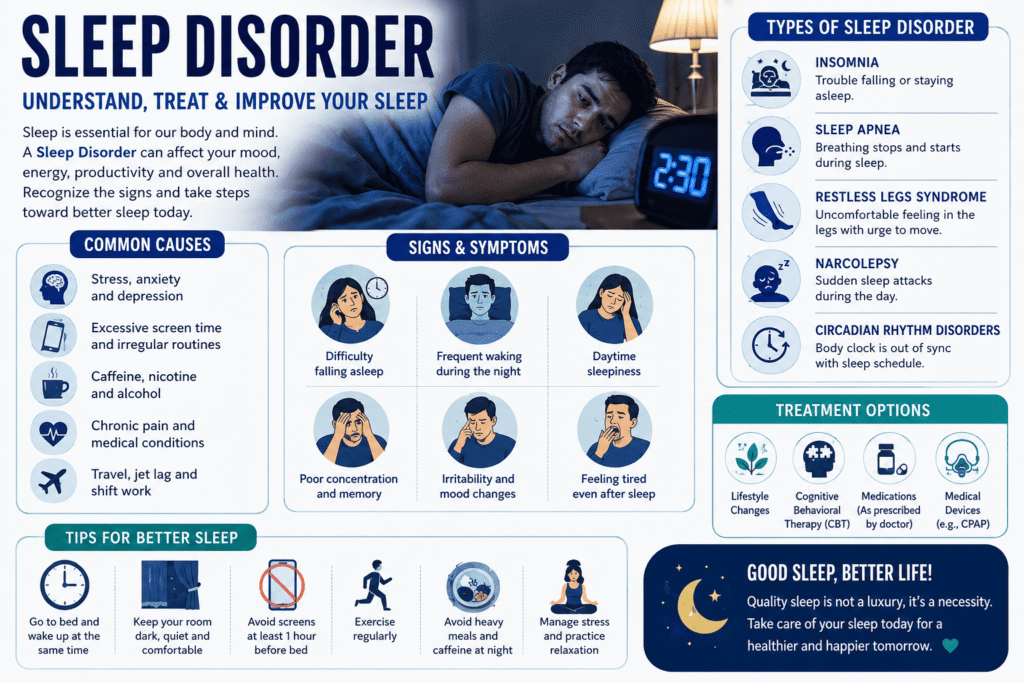
Sleep is one of the most important parts of a healthy life. However, millions of people struggle with a Sleep Disorder that affects their rest, health, mood, and daily activities. Poor-quality sleep can reduce energy, affect concentration, and make everyday tasks feel harder. Therefore, understanding sleep problems is an important step toward better health.
In today’s fast-moving world, stress, technology, caffeine, irregular routines, and other lifestyle factors can interfere with healthy sleep. Fortunately, many sleep problems can be managed with the right information, healthy habits, and professional care when needed.
The Ultimate Guide to Sleep Disorder: Causes, Symptoms, Treatment, and Prevention
This comprehensive guide explains what a Sleep Disorder is, the most common types, causes, symptoms, health effects, diagnosis, treatment options, prevention strategies, and practical guides that can help you build better sleep habits.
Table of Contents
What Is a Sleep Disorder?
A Sleep Disorder is a condition that regularly affects a person’s ability to sleep well. It may make it difficult to fall asleep, stay asleep, wake up at the desired time, or remain alert during the day.
Occasional poor sleep is common. However, persistent sleep problems may indicate an underlying condition that deserves attention.
A person with a Sleep Disorder may experience:
- Difficulty falling asleep
- Frequent waking during the night
- Waking too early
- Excessive daytime sleepiness
- Loud snoring
- Breathing interruptions during sleep
- Poor concentration
- Memory problems
- Irritability or mood changes
- Feeling tired despite spending enough time in bed
The exact symptoms depend on the type and cause of the condition.
Why Sleep Is Important
Sleep is not simply a period when the body switches off. During sleep, the brain and body carry out important processes that support physical and mental health.
Benefits of Healthy Sleep
Good-quality sleep can:
- Support memory and learning
- Improve concentration
- Support immune function
- Help regulate mood
- Support heart health
- Help maintain healthy metabolism
- Improve daytime energy
- Support physical recovery
- Improve productivity and performance
On the other hand, consistently poor sleep can affect several areas of life. Therefore, sleep should be treated as an important part of a healthy lifestyle rather than something that can always be sacrificed for work, study, or entertainment.
Types of Sleep Disorder
There are several types of sleep conditions. Each one can affect the body and daily routine differently.
1. Insomnia
Insomnia is one of the most commonly recognized sleep conditions. It involves difficulty falling asleep, staying asleep, or getting restful sleep despite having an opportunity to sleep.
Common Causes
- Stress
- Anxiety
- Depression
- Irregular sleep schedules
- Excessive caffeine
- Certain medications
- Poor sleep environment
- Chronic pain
For example, someone dealing with work pressure may go to bed on time but continue thinking about problems for hours. Over time, this pattern can contribute to persistent insomnia.
2. Sleep Apnea
Sleep apnea is a potentially serious condition in which breathing repeatedly stops and starts during sleep.
Common Signs
- Loud snoring
- Gasping during sleep
- Breathing pauses noticed by another person
- Morning headaches
- Dry mouth
- Daytime tiredness
- Difficulty concentrating
Sleep apnea should not be ignored because untreated breathing problems during sleep can affect overall health.
3. Restless Legs Syndrome
Restless Legs Syndrome, or RLS, can cause uncomfortable sensations in the legs and a strong urge to move them. Symptoms often become more noticeable when a person is resting or trying to sleep.
This can make falling asleep difficult and may lead to repeated sleep disruption.
4. Narcolepsy
Narcolepsy is a neurological sleep condition that can cause excessive daytime sleepiness and sudden episodes of sleep.
Some people may also experience other symptoms, such as sudden loss of muscle control triggered by strong emotions.
Because sudden sleep episodes can create safety risks, people with suspected narcolepsy should seek professional evaluation.
5. Circadian Rhythm Sleep Disorders
These conditions occur when a person’s internal body clock does not match their desired sleep schedule.
Examples include:
- Jet lag
- Shift work disorder
- Delayed sleep-wake phase disorder
- Advanced sleep-wake phase disorder
People who work at night or frequently change their schedules may be particularly affected.
Powerful Causes of Sleep Disorder
A Sleep Disorder can have one cause or several contributing factors. Identifying the underlying cause is important because treatment often depends on what is disrupting sleep.
Physical Causes
Certain physical conditions can interfere with comfortable and continuous sleep.
Examples include:
- Chronic pain
- Asthma
- Acid reflux
- Breathing problems
- Heart conditions
- Hormonal changes
- Certain neurological conditions
Mental Health Causes
Mental and emotional health can have a strong connection with sleep.
Common factors include:
- Stress
- Anxiety
- Depression
- Emotional distress
- Persistent worrying
For example, someone who spends hours worrying at night may find it difficult to relax enough to fall asleep.
Lifestyle Causes
Modern habits can also contribute to poor sleep.
These include:
- Excessive screen use
- Irregular bedtimes
- Too much caffeine
- Smoking
- Alcohol consumption
- Lack of physical activity
- Frequent late-night meals
- Long daytime naps
Therefore, improving daily habits can be an important part of managing sleep problems.
Signs and Symptoms of Sleep Disorder
Recognizing symptoms early can help people take action before sleep problems begin affecting their daily lives.
Common Symptoms
- Trouble falling asleep
- Frequent nighttime waking
- Waking too early
- Feeling tired after sleeping
- Daytime sleepiness
- Difficulty concentrating
- Memory problems
- Irritability
- Mood changes
- Loud snoring
- Gasping during sleep
- Restlessness at night
Moreover, some people may not realize they have a sleep problem. For example, someone with sleep apnea may be unaware of breathing interruptions because they happen while the person is asleep.
How Sleep Disorder Affects Physical Health
Long-term poor sleep can influence several areas of physical health.
Heart Health
Poor-quality or insufficient sleep has been associated with cardiovascular health problems. Sleep also plays a role in blood pressure regulation and overall recovery.
Immune System
Sleep supports normal immune function. Therefore, consistently poor sleep may make it harder for the body to maintain healthy immune responses.
Weight Management
Sleep affects appetite, energy, and daily activity. Poor sleep may make healthy weight management more difficult by influencing hunger, food choices, and motivation to exercise.
Blood Sugar Health
Sleep and metabolism are closely connected. Chronic sleep problems may affect glucose regulation and may be associated with a higher risk of metabolic problems.
Daily Energy
A person experiencing a Sleep Disorder may feel exhausted even after spending several hours in bed. This can reduce productivity and make normal activities more difficult.
How Sleep Disorder Affects Mental Health
Sleep and mental well-being are closely connected.
Persistent sleep problems may contribute to:
- Irritability
- Anxiety
- Low mood
- Emotional stress
- Difficulty concentrating
- Reduced motivation
- Memory difficulties
On the other hand, stress and mental health challenges can also make sleep worse. Therefore, sleep and emotional health should often be considered together.
Diagnosis of Sleep Disorder
A healthcare professional can help determine whether a sleep problem is caused by a medical condition, lifestyle factor, medication, or another issue.
Medical Evaluation
A doctor may ask about:
- Your normal sleep schedule
- How long it takes you to fall asleep
- How often you wake during the night
- Daytime tiredness
- Snoring
- Medications
- Caffeine use
- Work schedule
- Medical history
Keeping a sleep diary can also provide useful information.
Sleep Study
A sleep study, also known as polysomnography, may be recommended for certain suspected conditions.
Depending on the test, specialists may monitor:
- Brain activity
- Breathing
- Heart rate
- Oxygen levels
- Body movements
- Sleep stages
The results can help identify specific sleep-related conditions.
Treatment Options for Sleep Disorder
Treatment depends on the type, severity, and underlying cause of the problem.
1. Lifestyle Changes
Healthy daily habits are often an important part of improving sleep.
Healthy Habits
- Keep a consistent sleep schedule
- Create a relaxing bedtime routine
- Reduce evening screen use
- Limit caffeine late in the day
- Exercise regularly
- Keep the bedroom comfortable
- Avoid heavy meals close to bedtime
These changes may appear simple, but consistency is important.
2. Cognitive Behavioral Therapy
Cognitive Behavioral Therapy for Insomnia, commonly called CBT-I, is a structured treatment that can help people change thoughts and behaviors that interfere with sleep.
It may involve:
- Improving sleep habits
- Changing unhelpful beliefs about sleep
- Learning relaxation techniques
- Developing healthier sleep patterns
For persistent insomnia, professional guidance can be particularly useful.
3. Medications
In some situations, a doctor may recommend medication.
However, sleeping medicines are not appropriate for everyone and may have side effects or other risks. Therefore, medication should be taken only according to professional advice.
People should also avoid starting supplements or sleep medicines simply because they are promoted online as a quick solution.
4. Medical Devices
People with certain forms of sleep apnea may benefit from positive airway pressure devices such as CPAP.
A CPAP device helps keep the airway open during sleep. However, the appropriate treatment depends on the person’s specific condition and should be determined by a healthcare professional.
Powerful Guide #1: Build a Consistent Sleep Schedule
A consistent sleep schedule is one of the most useful habits for improving sleep. Try to go to bed and wake up at approximately the same time every day, including weekends. This routine can help your body maintain a stable sleep-wake rhythm. As a result, falling asleep and waking up may become easier.
Powerful Guide #2: Create a Sleep-Friendly Bedroom
Your bedroom can strongly influence your sleep quality. Keep the room dark, quiet, comfortable, and at a suitable temperature. Use comfortable bedding and remove unnecessary distractions. Moreover, avoid turning your bed into a workplace or entertainment area. A calm environment can help your brain associate the bedroom with relaxation and sleep.
Powerful Guide #3: Reduce Screen Time Before Bed
Phones, tablets, computers, and television can keep your mind active when you should be preparing for sleep. Try reducing screen use during the period before bedtime. Instead, read a book, listen to calm music, stretch gently, or practice relaxation. Creating a screen-free wind-down routine may make bedtime more peaceful.
Powerful Guide #4: Manage Stress for Better Sleep
Stress can make it difficult to quiet your thoughts at night. Try simple relaxation methods such as deep breathing, meditation, gentle stretching, or writing down tomorrow’s tasks. In addition, avoid using bedtime as a time to solve every problem from the day. Reducing mental tension can make the transition into sleep easier.
Powerful Guide #5: Watch Your Caffeine Intake
Caffeine can stay active in the body for several hours and may interfere with sleep, especially when consumed later in the day. Coffee, energy drinks, tea, and some soft drinks contain caffeine. Therefore, people experiencing sleep problems may benefit from reducing late-day caffeine and observing whether their sleep improves.
Powerful Guide #6: Exercise Regularly
Regular physical activity can support better sleep and overall health. Walking, cycling, swimming, and other moderate activities can help reduce stress and support a healthy routine. However, intense exercise immediately before bedtime may make some people feel more alert. Choose an exercise time that allows your body to relax before sleeping.
Powerful Guide #7: Recognize Warning Signs Early
Early recognition can prevent sleep problems from being ignored for too long. Pay attention to persistent daytime sleepiness, loud snoring, repeated waking, breathing interruptions, or difficulty concentrating. Keeping a simple sleep diary can also help identify patterns. If symptoms continue or interfere with daily life, consider discussing them with a healthcare professional.
Powerful Guide #8: Know When Professional Help Is Needed
Not every bad night requires medical attention. However, persistent sleep problems should not be ignored. If poor sleep continues regularly, affects work or study, or causes significant daytime tiredness, speak with a healthcare professional. Severe snoring, gasping, or breathing pauses during sleep are especially important signs that deserve proper evaluation.
Powerful Guide #9: Avoid Common Sleep Mistakes
Some everyday habits can quietly damage sleep quality. Examples include changing your bedtime every night, using your phone in bed, drinking caffeine late, taking long daytime naps, and eating very heavy meals before sleeping. Therefore, identify your personal sleep mistakes and replace them gradually with healthier habits.
Powerful Guide #10: Follow a 7-Day Sleep Improvement Plan
Start with small changes rather than trying to change everything overnight. For seven days, maintain a regular bedtime and wake-up time, reduce evening screen use, limit late caffeine, exercise regularly, and keep your bedroom comfortable. Record your sleep and energy levels each morning. This simple experiment can help you identify useful habits.
Natural Tips to Prevent Sleep Disorder
Healthy routines can support better sleep and may reduce some common sleep problems.
Top Sleep Tips
- Go to bed and wake up at consistent times.
- Keep your bedroom dark and quiet.
- Reduce screen use before bed.
- Exercise regularly.
- Limit caffeine later in the day.
- Avoid heavy meals close to bedtime.
- Use relaxation techniques.
- Keep daytime naps short or avoid them if they affect nighttime sleep.
- Get regular daytime light exposure.
- Create a relaxing bedtime routine.
However, lifestyle changes should not replace medical evaluation when symptoms suggest a serious condition.
Pros and Cons of Common Sleep Treatments
| Treatment | Pros | Cons |
|---|---|---|
| Lifestyle changes | Safe, practical, supports overall health | Requires consistency |
| CBT-I | Can provide lasting benefits for insomnia | Requires time and commitment |
| Medication | May provide short-term symptom relief | Can cause side effects and is not suitable for everyone |
| CPAP | Effective treatment for many people with obstructive sleep apnea | Requires adjustment and regular use |
The best approach depends on the cause and type of sleep problem.
Best Foods for Better Sleep
Diet alone cannot cure a Sleep Disorder, but healthy eating habits can support overall sleep and health.
Helpful Foods
A balanced diet may include:
- Oats
- Bananas
- Almonds
- Walnuts
- Cherries
- Milk or other nutritious foods
- Fruits and vegetables
- Whole grains
On the other hand, some people may find that caffeine, very heavy meals, or spicy foods close to bedtime disturb their sleep.
Therefore, pay attention to how your own eating pattern affects your sleep.
When Should You See a Doctor?
You should consider professional advice when sleep problems become persistent or interfere with everyday life.
Seek medical evaluation if:
- Sleep problems continue regularly
- Daytime sleepiness affects work or study
- You frequently wake during the night
- You snore loudly
- Someone notices that you stop breathing during sleep
- You wake up gasping or choking
- You experience unexplained extreme tiredness
- Sleep problems are affecting your mood or relationships
Early evaluation can help identify the underlying problem and guide appropriate treatment.
Trusted Facebook Pages for Sleep Health Information
For additional educational information about sleep health, readers can follow reputable organizations such as:
- Sleep Foundation on Facebook
- American Academy of Sleep Medicine on Facebook
- Centers for Disease Control and Prevention on Facebook
These pages can be useful for general health education, sleep awareness, and public-health information. Social media information should not replace advice from a qualified healthcare professional.
Frequently Asked Questions (FAQs)
1. What is the most common Sleep Disorder?
Insomnia is one of the most common sleep problems. It can involve difficulty falling asleep, staying asleep, or getting restful sleep.
2. Can stress cause a Sleep Disorder?
Yes. Stress can make it difficult to relax and fall asleep. Long-term stress may also contribute to persistent sleep problems.
3. How many hours of sleep do adults need?
Most adults generally need around 7 to 9 hours of sleep per night, although individual needs can vary.
4. Can children have a Sleep Disorder?
Yes. Children can experience several sleep conditions, including sleep apnea, insomnia, circadian rhythm problems, and parasomnias.
5. Is a Sleep Disorder dangerous?
Some sleep conditions can become serious when untreated. For example, sleep apnea can involve repeated breathing interruptions. Persistent symptoms should be evaluated by a healthcare professional.
6. Does exercise improve sleep?
Regular physical activity can support healthy sleep for many people. However, the ideal timing and intensity of exercise can vary between individuals.
7. Can diet affect sleep?
Yes. Caffeine, heavy meals, and certain eating habits may interfere with sleep. A balanced diet and sensible meal timing can support overall health and healthy sleep.
Conclusion:
A Sleep Disorder can affect far more than your nighttime routine. It may influence your energy, concentration, mood, productivity, and overall health. However, recognizing the signs early and developing healthy sleep habits can make an important difference.
Start with simple steps. Build a consistent sleep schedule, create a comfortable bedroom, reduce evening screen use, manage stress, watch your caffeine intake, and stay physically active. Moreover, do not ignore persistent symptoms such as severe snoring, breathing interruptions, or extreme daytime sleepiness.
If you believe you may have a Sleep Disorder, consider speaking with a qualified healthcare professional. The right diagnosis and treatment can help you move toward healthier sleep and a better quality of life.
Better sleep is not a luxury—it is an important part of a healthier life. Start improving your sleep habits today.
If you want to read more then click here. Heart Attack
If you want to read more then click here. Type 2 Diabetes